Trump vs. the Bond Market
Article
Article


Richard Morin

Asmaa Saleem Malik
Donald Trump lives in a parallel universe where the United States has defeated Iran, the Strait of Hormuz is open to maritime traffic, Vladimir Putin is a great leader, and Canada is the worst of neighbors. These delusions and lies may convince tens of millions of MAGA supporters, and the stock market may look the other way and keep hitting new highs, but there’s one market that isn’t fooled: the bond market.
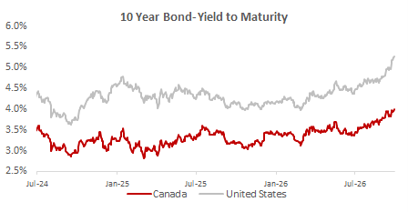
The yield on 10-year U.S. Treasury bonds was about 4.1% at the start of Trump’s second term. Today, it stands at nearly 5.3%, its highest level in two decades. Several factors account for this significant increase. Persistent inflation is eroding the fixed income provided by bonds, so buyers are demanding a higher yield to compensate. The U.S. government is also competing with companies in the artificial intelligence ecosystem to borrow in the bond market, which drives rates up. Finally, the colossal size of the U.S. debt—more than $40 trillion (40,000 billion)—points to a potential crisis, justifying a higher bond yield to compensate for the risk.
This increase could eventually add $400 billion to the annual debt service in the United States, on top of the $2 trillion deficit already projected for 2026—or 6% of GDP. For now, however, the consequences of the rate hike are being felt not only in the United States but also around the world. Mortgage rates have now reached 7% in the United States, and businesses are also facing higher borrowing costs.
Because bond markets are interconnected, bond yields in nearly all developed countries are also rising in 2026. In Canada, in particular, yields on 10-year bonds have risen from 3.1% to 3.9% since the beginning of the year.
Although the major U.S. indices—the S&P 500 and the NASDAQ—are near record highs, when we look beyond the handful of mega-cap stocks that account for most of the gains, we see that several markets and sectors are down sharply or even undergoing a correction: small-cap stocks, banks, and utilities, in particular. Read more in the United States section.
If the rate hike were to be permanent—or, worse yet, continue—it should come as no surprise if it triggers a correction in the major stock indices. If your portfolio’s allocation to stocks exceeds your target, this could be a good time to rebalance. That way, you’ll have more cash on hand to buy back stocks during the next bear market.
In the meantime, you'll earn a respectable income from the bond portion of your portfolio.
Happy Thanksgiving!
The Canadian stock market rose 1.6% in the third quarter of 2026, bringing the year-to-date gain to 13.0%.
Canadian stocks benefited from favorable commodity prices during the quarter. Oil prices remained high (up 36.3% in the third quarter of 2026), supporting the Canadian energy sector, which accounts for 16.3% of the market.

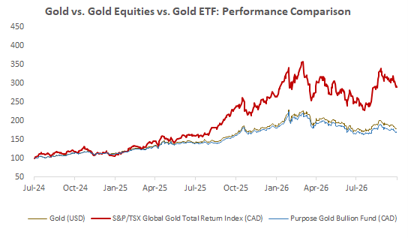
The price of gold also rose (up 3.7% in the third quarter of 2026), benefiting Canadian gold producers as well as the materials sector as a whole. As gold reached record highs, mining companies provided another major source of support for Canadian stocks.
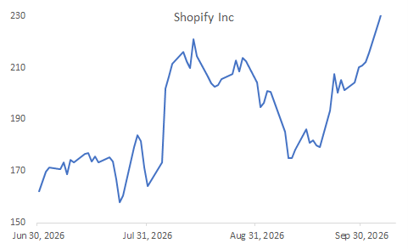
Beyond commodities, the Canadian information technology sector posted a return of 17.9% in the third quarter, driven primarily by Shopify, which rose by about 30% during the period, thereby contributing significantly to the sector’s performance. This trend highlights the broadening of the Canadian market, which now extends beyond its traditional focus on the banking, oil, and mining sectors.
U.S. equities gained 2.2% in Q3 2026 supported by strong corporate earnings and continued enthusiasm around artificial intelligence (AI). However, the performance masks a much weaker picture beneath the surface. The sharp rise in Treasury yields became one of the quarter’s defining developments, creating growing pressure on rate-sensitive and more speculative areas of the equity market.
The yield on 10-year U.S. Treasury bonds rose sharply during the quarter, increasing by 85 basis points to 5.29% as of September 30, 2026—its highest level since 2002. This rise in rates weighed on stock valuations, particularly affecting small-cap stocks, banks, utilities, and unprofitable technology companies.

Market gains were concentrated among a few large technology companies benefiting from continued investment in AI. Microsoft rose 37.5%, while NVIDIA gained 30.3%, Apple advanced 29.8%, and Meta Platforms climbed 29.1%. Palantir Technologies was another standout, surging 60.3%. These gains helped prop up the S&P 500, even as many other stocks struggled.
International stocks rose 1.0% (in Canadian dollars) in the third quarter of 2026, bringing the year-to-date gain to 14.2%.
Japanese stocks rose 5.8% during the quarter, buoyed by the continued strength of technology and semiconductor stocks. Companies such as Advantest, a leading manufacturer of semiconductor testing equipment, and Tokyo Electron, a major manufacturer of semiconductor production equipment, benefited from strong demand driven by the continued growth of artificial intelligence and cutting-edge semiconductor production.
European stocks posted a return of -1.2% in the third quarter, as gains made early in the period were offset by a more challenging September.
Emerging markets posted a return of -0.2% (in Canadian dollars) in the third quarter of 2026, bringing year-to-date gains to 26.4%.
Taiwanese stocks rose 4.3% in the third quarter, buoyed by gains in certain technology sectors due to continued demand for AI-related semiconductors. However, Taiwan Semiconductor Manufacturing Company (TSMC), a major supplier of advanced chips for artificial intelligence and data centers, saw its stock fall 4.5% during the quarter.
South Korean equities declined 8.2% in Q3, as semiconductor stocks came under pressure following strong gains earlier in the year. Samsung Electronics fell 19.6%, while SK hynix dropped 33.0%, amid growing investor caution about semiconductor valuations despite continued demand for AI-related chips.Chinese equities gained 3.5% in Q3, supported by continued strength in technology stocks and expectations for further economic stimulus from the Chinese government.
Chinese equities gained 3.5% in the third quarter, buoyed by the strong performance of technology stocks and expectations of new economic stimulus measures from the Chinese government.
Indian stocks posted a return of -4.6% in the third quarter, as rising oil prices and the depreciation of the rupee weighed on the market. Foreign investors also reduced their exposure to Indian stocks, further increasing pressure on the market.
During the third quarter of 2026, the yield on 10-year Government of Canada bonds rose from 3.38% to 3.99%, causing bond prices to fall and resulting in a total return of -3.0% for these securities over the quarter.
The yield on 10-year Canadian bonds remains significantly lower than that of U.S. bonds, in part because inflation is somewhat better under control. It also—and above all—reflects a much more enviable fiscal situation, with the lowest debt-to-GDP ratio among G7 countries (taking into account the substantial assets held by Canadian pension funds).
In the United States, the 10-year bond yield rose from 4.44% to 5.29% for the reasons mentioned above: persistent inflation, competition between the government and corporations in the bond market, and a deteriorating fiscal situation with no prospect of improvement